
Ludhiana Murder Case Over Rs 150 Bil
Ludhiana Murder Case Over Rs 150 Bill: A Shocking Crime That Stunned Punjab
Introduction
Crime stories often shock us not only because of the brutality involved but also because they highlight the dangers hidden in everyday life. One such recent case is the Ludhiana murder case over Rs 150 bill, which made national headlines. A small argument at a local eatery turned into a deadly incident, leaving a family devastated and a community horrified. This case is a grim reminder that anger, alcohol, and illegal weapons can together create tragic outcomes.
What Exactly Happened in Ludhiana?
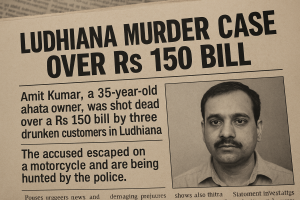
The incident took place in Ludhiana, Punjab, where the victim, Amit Kumar (35), owned a small ahata (food joint). On an ordinary day, three drunk men visited his shop and ordered food and drinks. When the bill of just Rs 150 was presented, the men refused to pay and began arguing.
The quarrel escalated quickly. In a shocking turn, one of the customers pulled out a gun and shot Amit Kumar in the chest. He was rushed to the hospital but tragically declared dead by doctors. A life was lost, and a family destroyed, all because of a dispute over a mere Rs 150 bill.
The Escape of the Accused
After the shooting, the three accused fled the scene on a motorcycle. Police are using CCTV footage from the area to identify them, but low-light conditions and blurred number plates have made the process difficult. Several police teams have been deployed to track down the culprits, and efforts are ongoing to bring them to justice.
Investigation in Progress
The police registered a case under Section 302 IPC (murder) and began questioning witnesses. CCTV evidence is crucial, though not very clear. Still, law enforcement is confident that with combined intelligence inputs and public cooperation, the accused will be caught soon.
The investigation also highlights the dangerous ease of firearm availability in Punjab. What began as a minor dispute over money escalated into a murder case simply because a gun was present.
Public Reaction and Fear
This crime created widespread fear and anger in Ludhiana and across Punjab. Locals are shocked that such a trivial matter could lead to murder. On social media, outrage has been massive, with people demanding immediate justice for Amit Kumar and his family.
The case has sparked two major questions among the public:
How did the accused gain access to firearms so easily?
Why are petty disputes escalating into deadly crimes in society today?
Social and Legal Implications
The Ludhiana murder case over Rs 150 bill reflects deep social and legal concerns:
Alcohol and aggression: Most violent disputes stem from drunken behavior. Awareness programs and stricter liquor shop regulations are urgently needed.
Easy access to guns: Both licensed and illegal firearms circulate unchecked. Stricter gun laws and enforcement must be implemented.
Pressure on law enforcement: Police must solve this case quickly to restore community trust and prevent public fear from rising.
Victim’s family plight: Amit Kumar’s family has been left in financial and emotional despair. The government should provide compensation and support to help them cope.
Why This Case Became National News
Petty disputes turning violent are not new in India, but this case became national news because:
A small Rs 150 bill dispute escalated into a shocking murder.
Punjab already faces concerns over gun culture and liquor-related crimes.
CCTV clips and eyewitness accounts circulated heavily on news channels and social media.
For these reasons, the keyword “Ludhiana murder case over Rs 150 bill” is now trending on search engines and news portals.
Preventive Measures Needed
This tragedy serves as a wake-up call for society. Preventive measures are essential to avoid such incidents in the future:
Public awareness: Citizens should be educated about anger management and conflict resolution.
Stronger policing: Night patrolling and better CCTV surveillance in high-risk areas like liquor shops and food joints are needed.
Gun control: Authorities must enforce stricter firearm regulations to reduce the misuse of weapons.
Community cooperation: Locals should report violent behavior and cooperate with police investigations.